BOSS OC-5 Octave
What it is
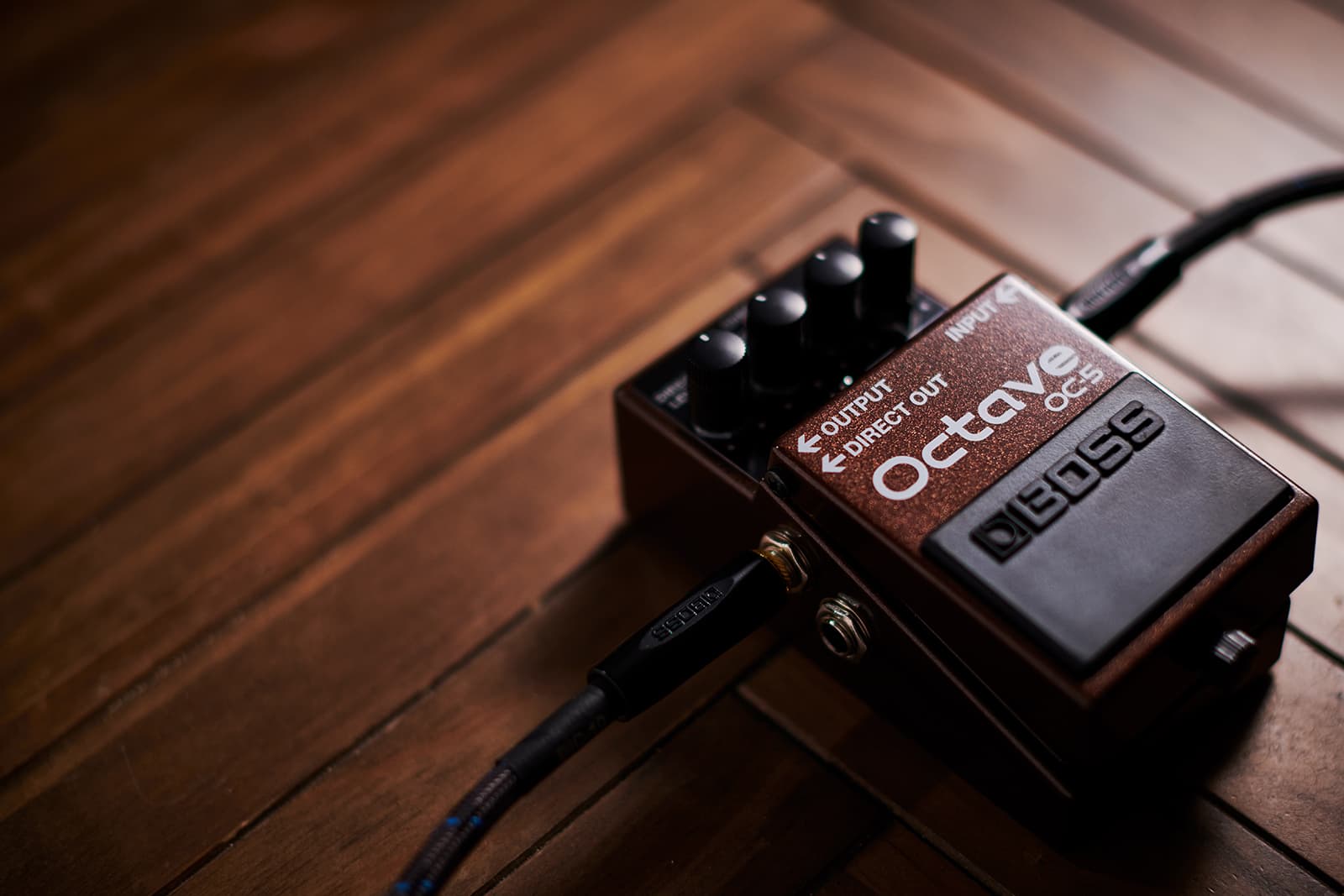
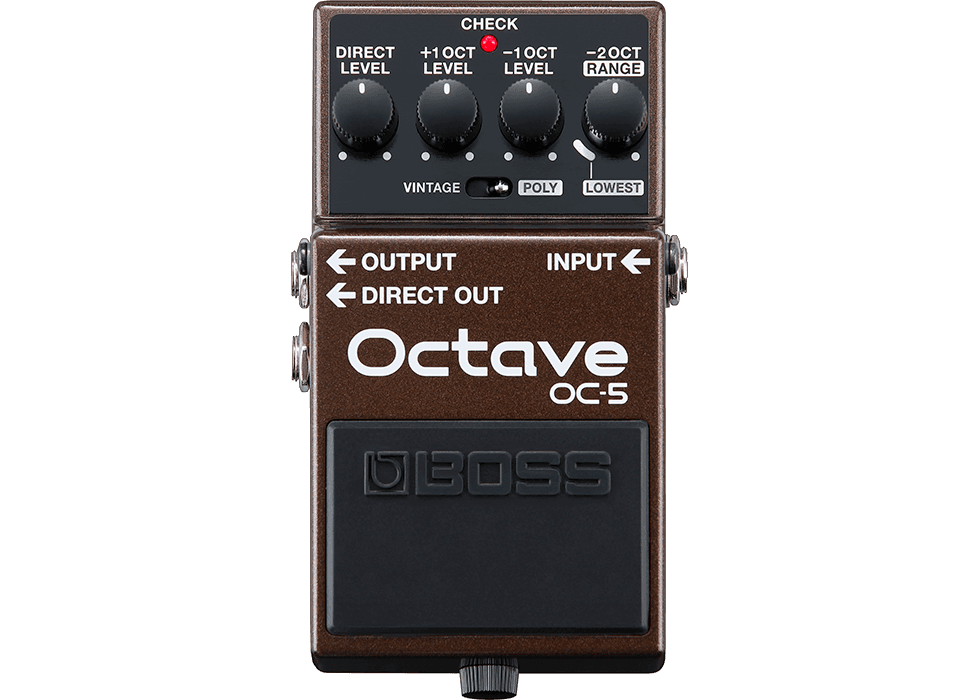
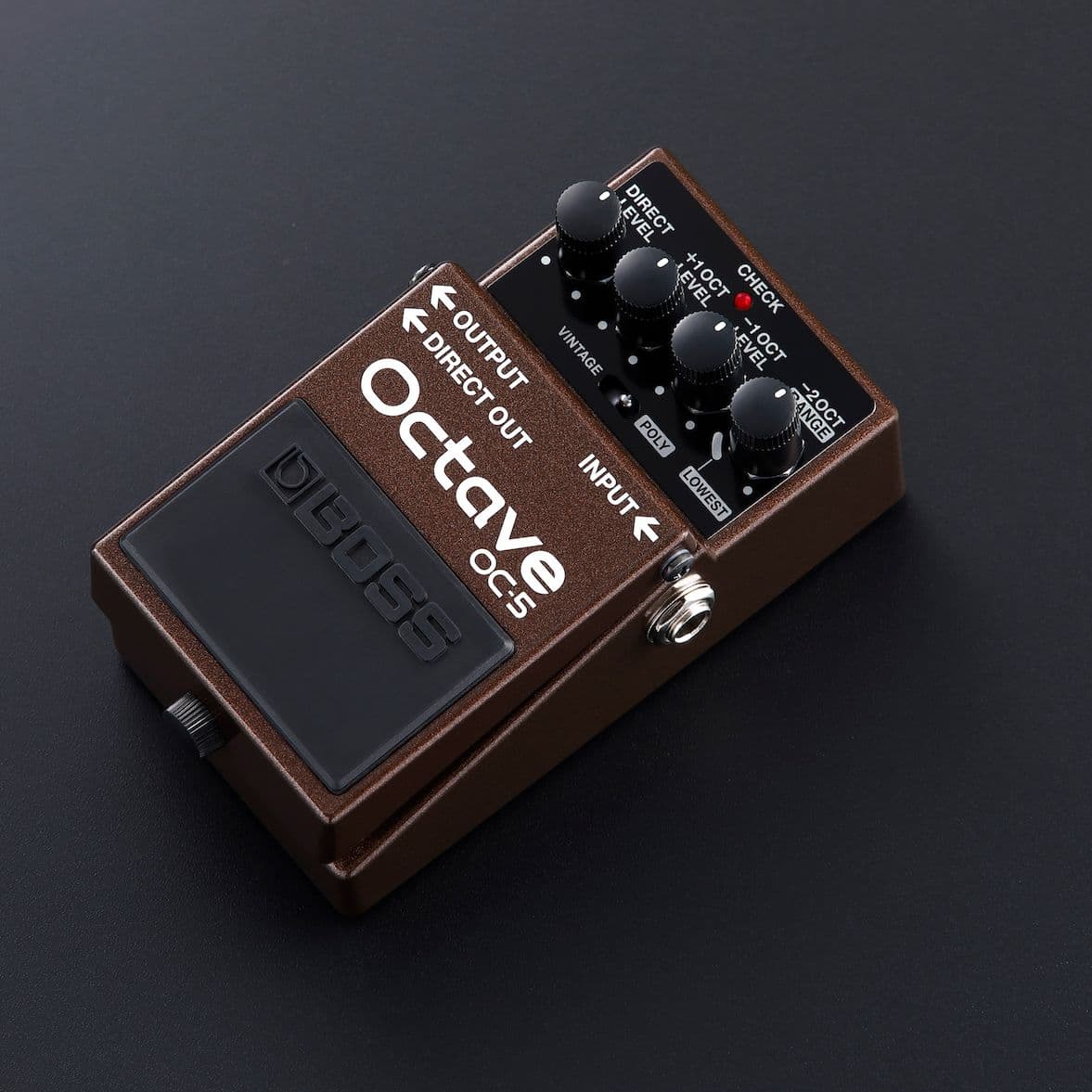
The OC-5 is BOSS's octave pedal and the successor to the OC-2 (1982) and OC-3 (2003). BOSS describes it as an updated industry-standard octave pedal with a newly developed tracking engine. It has a Vintage/Poly switch, a Guitar/Bass switch, and separate -2/-1 and +1 octave controls, so it can blend up to four pitch layers. Reviewers compare its tracking favourably with the OC-2's slower response, and some say the OC-3's drive mode and dedicated bass input are missing. Several sources note that it has no distortion circuit. Its early reception was divided. Some users preferred the OC-3, while most reviewers described the OC-5 as a clear improvement. Premier Guitar rated it 4.4 out of 5, and Guitar.com gave it 9 out of 10. Reviewers praised its simple controls and its Poly-mode tracking, and criticised the lack of deeper controls found on larger octave units.
Specifications
- Inputs and outputs
- One 1/4 inch input, one 1/4 inch main output, and one 1/4 inch direct out; buffered bypass
- Nominal input level
- -20 dBu
- Input impedance
- 1 MΩ
- Nominal output level
- -20 dBu
- Output impedance
- 1 kΩ
- Recommended load
- 10 kΩ or greater
- Power
- One alkaline 9 V battery, or the optional PSA-series AC adaptor (sold separately)
- Current draw
- 60 mA (BOSS specification)
- Battery life
- About 5 hours on alkaline (BOSS specification)
- Dimensions
- 73 mm wide, 129 mm deep, 59 mm high
- Weight
- 440 g including battery
- Warranty
- Five years, per the manufacturer's website
- Controls
- Pedal switch, Guitar/Bass switch, Vintage/Poly switch, Direct Level knob, +1 OCT knob, -1 OCT knob, -2 OCT/Range knob, and a CHECK indicator that doubles as a battery check
How it's used
Guitarists use the OC-5 for solos, for adding a bass-like root under power, open, and barre chords in Poly mode, and for simulating a twelve-string sound. Fingerstyle and jazz players use it in solo settings to fill out the sound. Several reviewers report that it works on bass, including five-string bass. It is usually placed early in the signal chain, before fuzz or overdrive.
Suggested usage
Play cleanly
One Thomann reviewer found tracking very good when playing cleanly. A forum reviewer noted that higher-register lines can become glitchy on any monophonic octave pedal.
Check the pickup
One user with a passive soundhole pickup found that Poly mode always tracks the lowest note, so syncopated playing can produce unwanted octaves on higher notes.
Order the chain
One writer advises placing the octave before fuzz. Because the OC-5 is buffered, another writer notes that a fuzz needing a low-impedance or non-buffered input may behave differently in this position.
Try a fuzz after the upper octave
One reviewer found the +1 octave sounds especially strong with a fuzz pedal placed after the OC-5.
Adjust the dry blend
One source argues that the dry blend setting matters more than which octave pedal is used.
Expect level differences
One user found the -1 octave quite quiet when soloed.
What reviewers said
- Guitar Player
Describes the OC-5 as a worthy new entry in BOSS's octave lineup, citing the +1 octave control and improved tracking, and notes that some players may miss the OC-3's drive feature. Gives a street price of $129, with the date uncertain.
- Premier Guitar
Rates the OC-5 4.4 out of 5 and says it can move from a niche effect to a full-time tool.
- Guitar.com
Gives the OC-5 9 out of 10, praising its simple controls and excellent Poly-mode tracking, while criticising the lack of deeper controls found on larger octave units.
- Sweetwater customer reviews
Customer reviews include a bassist who calls it a fantastic octave pedal for bass, and another reviewer who finds the octave-up pleasing with the right overdrive.
Sources
- BOSS OC-5 Octave Pedal - Black for sale online
- Boss OC-5 review: what makes a great octave pedal?
- Pedalboard gems #15: Boss OC-5 Octave
- Boss OC-2 vs OC-5: Which Octave Pedal Is Actually Worth ...
- BOSS - OC-5
- Boss OC-5 Octave review
- Boss OC-5 Octave Review - Premier Guitar
- Boss OC-5 Octave Review
- Boss OC-2 vs. OC-5: Help me pick
- BOSS OC-5 Octave
- Boss OC-5 Polyphonic Guitar/Bass Octave Pedal
- Boss OC-5 Octave
- User manual Boss OC-5 (English - 1 pages)
- Using the Boss OC-5 in a Jazz Setting & a comparison with the old OC-3
- Boss OC-5 Octave Pedal User Reviews