Shure SM57
What it is
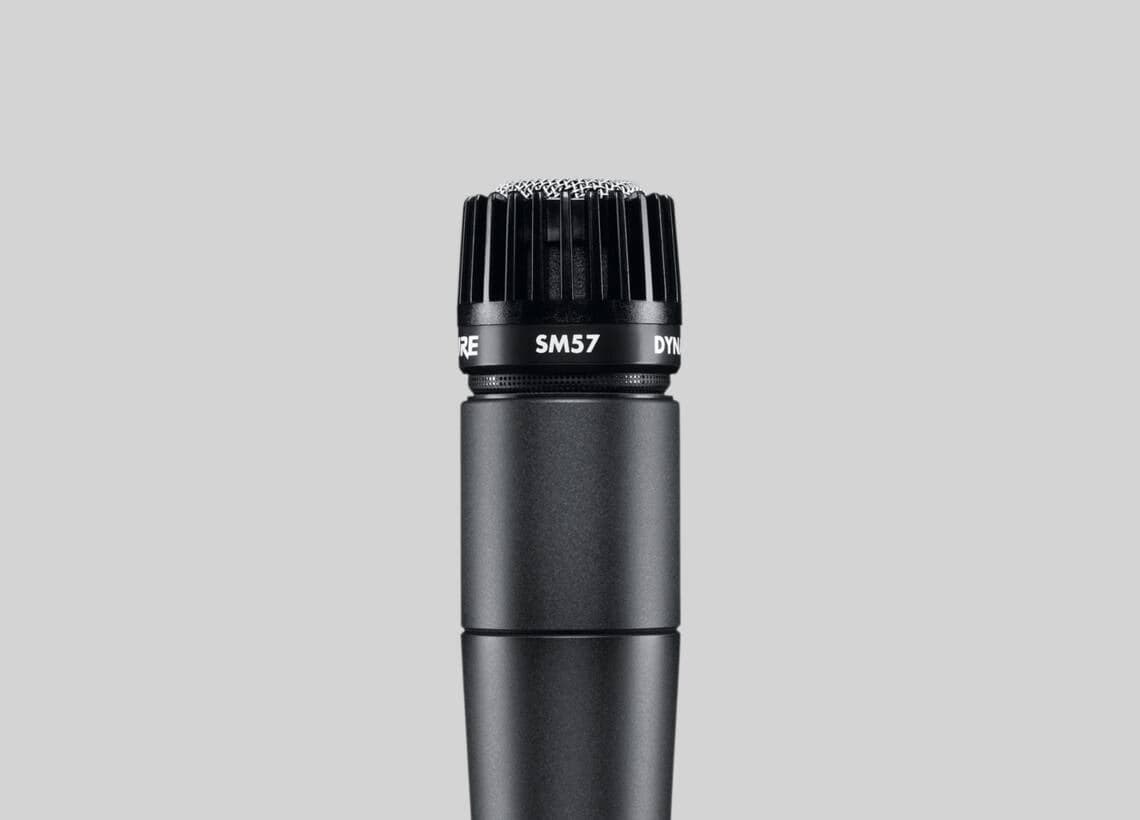
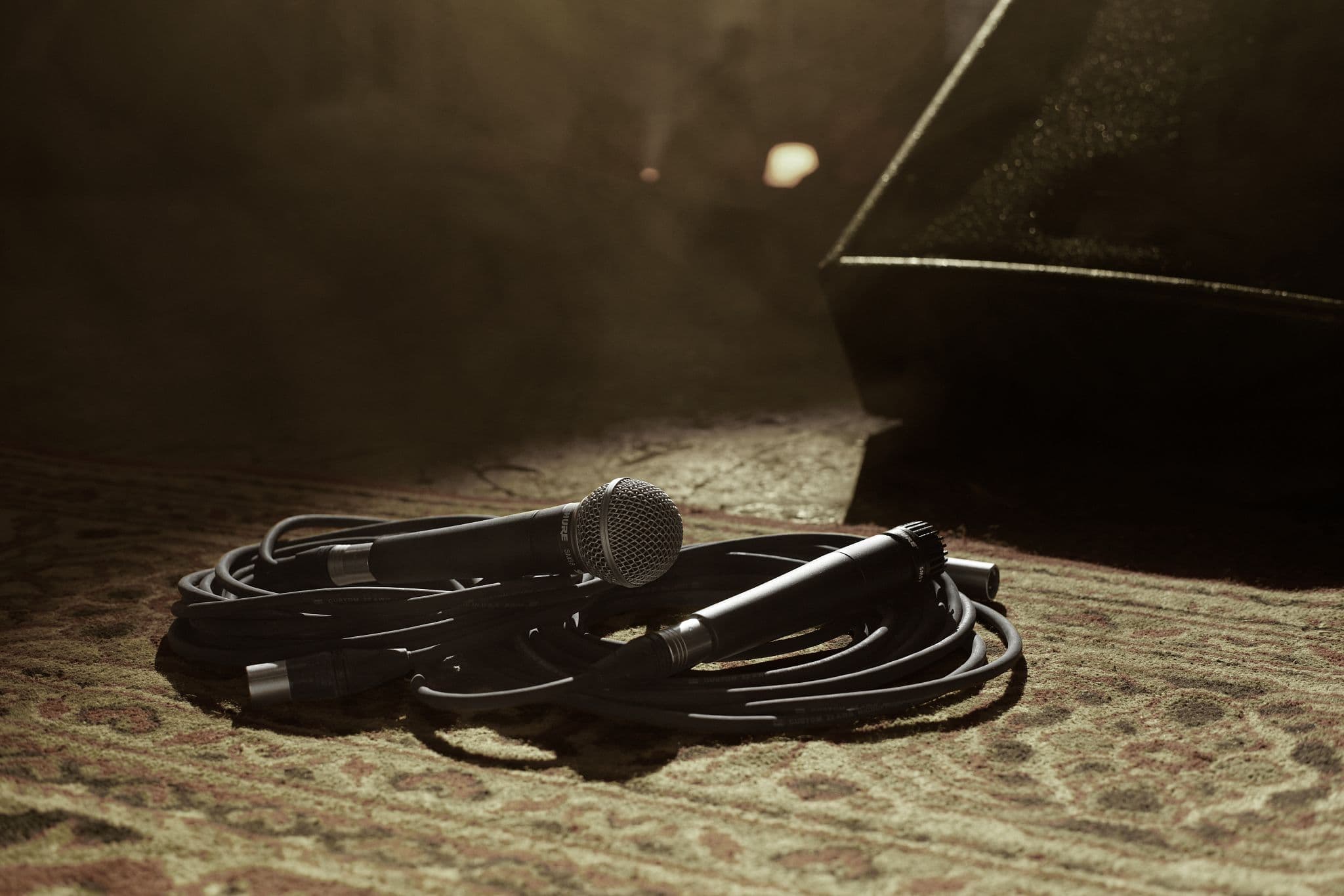
The SM57 is a low-impedance dynamic (moving-coil) cardioid microphone made by Shure Incorporated. It needs no external power, and Shure markets it for live sound reinforcement and studio recording, with instrument miking as its main application. Its capsule lineage goes back to Shure's Unidyne design work. The Unidyne III capsule, developed by Shure engineer Ernie Seeler in 1959, was later used in the SM57. What distinguishes the SM57 is its combination of a cardioid pattern, a contoured upper-mid response, and a die-cast steel body with a pneumatic shock mount. Reviewers describe it as durable and as a common first microphone for musicians. Its SM58 counterpart shares much of the same design but has a different grille and is marketed for vocals. Shure's Beta 57A is a higher-output, tighter supercardioid alternative. The SM57 is one of the most widely used dynamic microphones in professional settings and has been in production for decades. Sources in the notes describe it as a long-standing industry standard, though they do not give a detailed production history.
Specifications
- Type
- Dynamic (moving-coil), no external power required
- Polar pattern
- Cardioid, rotationally symmetrical about the microphone axis, uniform with frequency
- Frequency response
- 40 Hz to 15,000 Hz
- Sensitivity
- Open-circuit voltage of -56.0 dBV/Pa (1.6 mV) at 1,000 Hz
- Impedance
- Rated 150 Ω (310 Ω actual) for connection to low-impedance microphone inputs, per Shure
- Polarity
- Positive pressure on the diaphragm produces positive voltage on pin 2 with respect to pin 3
- Connector
- Three-pin professional audio connector (male XLR)
- Weight
- 284 g (10 oz)
- Dimensions
- 157 mm (6-3/16 in.) long x 32 mm (1-1/4 in.) wide at the widest point
- Construction
- Die-cast steel body with an integrated pneumatic shock mount
- Included
- A25D swivel stand adapter and storage bag, per Shure's product page
- Cable
- XLR cable not included, per the Long McQuade listing
How it's used
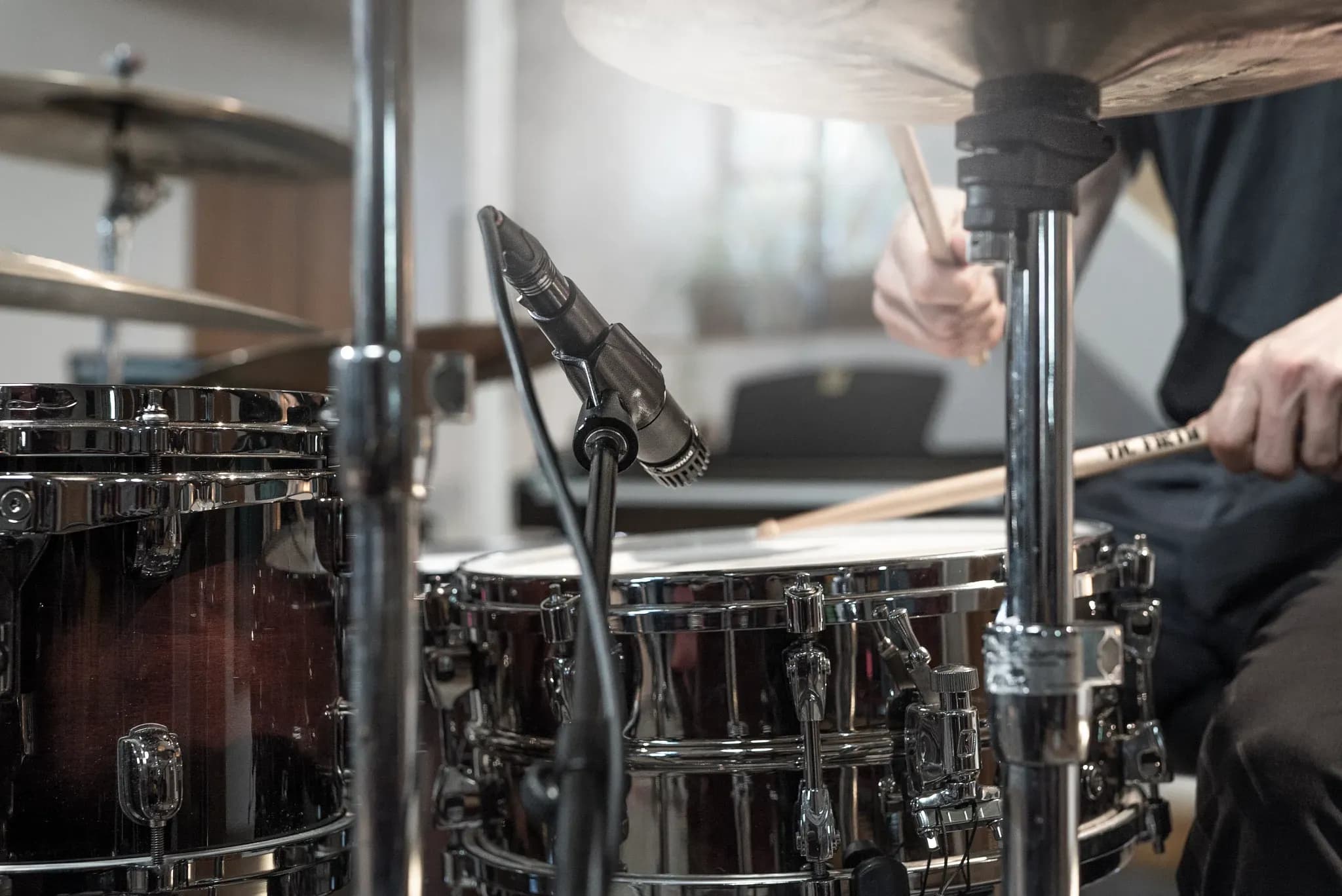
The SM57 is most often used on electric guitar and bass amplifier cabinets and on snare drums. Reviewers and sources also list brass and woodwind instruments, such as saxophone and trumpet, as common applications. It is used for acoustic instruments, including banjo, but sources disagree on how well it suits acoustic guitar, and some prefer a condenser. Its use for spoken word and sung vocals is contested. It is commonly placed in a studio or live signal chain directly at the source, often close to an amplifier speaker or drum head.
Suggested usage
Use proximity effect deliberately
Moving closer to the source increases low-frequency emphasis, which some engineers use on drums and full-sounding amplifiers.
Use a foam filter or windscreen
One reviewer found that a foam filter gives a slightly brighter, more detailed sound than an SM58 and less boom than an SM7B. Plosives are a problem without a windscreen when used for vocals.
Place it close to the speaker on amplifiers
One reviewer reports that close miking allows a loud amplifier to reach saturation without the microphone overloading or distorting.
Allow for the upper-mid lift
Shure describes the response as contoured, and a reviewer reports a slight upper-mid boost that helps instruments cut through a dense mix.
Plan for lower output
A reviewer lists low sensitivity as a drawback, so a dynamic SM57 may need more preamp gain than a condenser microphone.
Handle the cardioid pattern with care
One forum commenter describes the sound as harsh unless the pattern is worked with carefully, so placement matters.
What reviewers said
- SoundGuys
Gave it 9 out of 10 and recommended it for recording or amplifying instruments. The reviewer called it a sensible first microphone that needs no external power, but noted it is not designed for vocal use.
- Mastering.com
Found it a solid choice for a dynamic microphone in a home studio. The cited 4.15-out-of-5 rating comes from a forum poll, not an independent test.
- HigherHz
Recommends it as a useful microphone for most studios, with handling of high sound pressure levels and rejection of background noise as its main strengths. It suggests a condenser instead for acoustic guitar recorded at home.
- Gearank
Argues that every studio should have one, citing its versatility on electric guitar and screamed vocals. It notes the microphone is less detailed than a good cardioid condenser.
- SoundRef
States that the SM57 will never sound as sparkly or bright as a studio condenser, but describes it as having a consistent, warm tone.
- Demomentor
Describes it as an easy choice for home recording, citing its versatility and durability.
- Tone Tailors
Praises the build and presence peak, and describes it as a go-to microphone for guitar amplifiers and snare drums.
Sources
- www.shure.eu Wired Microphones
- Shure SM57 Review - Dynamic Cardioid Microphone - Gearank - Music Gear Information for Live Performance or Studio
- Shure SM57
- Shure SM58
- Shure SM57 review - SoundGuys
- Shure SM57 Microphone Specification Sheet
- SM57 Cardioid Dynamic Microphone Type Dynamic Frequency Response
- Shure - SM57 Unidirectional Dynamic Microphone
- Shure SM57 review: Industry standard for a reason
- Shure SM57 Microphon Review: The Workhorse of Pro Audio October 2026
- Shure SM57 Dynamic Microphone
- Shure SM57 Review: The Undisputed Workhorse of Stages and Studios
- The Definitive Shure SM57 Review
- Shure SM57
- www.shure.com